DS-315 Electronic Crane Scale
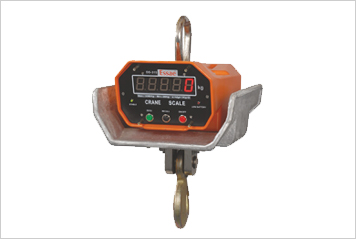
Crane scales are essential in industries where lifting and weighing heavy loads are routine tasks. Whether you work in logistics, construction, or manufacturing, knowing the load weight is crucial for safety and efficiency. Unlike standard floor scales, crane scales operate in conjunction with a crane or hoist. They offer flexibility in weighing objects during lifting and help prevent crane overloading and accidents. Their designs ensure they can withstand the heavy-duty demands of various industrial applications..
Types of Crane Scales
Not all crane scales are built the same. Depending on the environment and specific needs, you may require a different type of scale. Here’s a look at the three main categories.
Digital Crane Scales
Digital crane scales are the most commonly used. They feature a digital display that provides clear and easy-to-read measurements. With load cells at their core, these scales convert force into an electrical signal which is then displayed. They are known for their precision and are often preferred in environments where accuracy is the priority, such as shipping or freight management.
Electronic Crane Scales
Electronic crane scales function similarly to digital models but use different sensors to measure weight. These scales are reliable and often feature high-visibility displays. They are suitable for industrial environments with low lighting or challenging conditions. The color-coded displays enhance readability so that operators get precise data even in fast-paced environments.
Hydraulic Crane Scales
Hydraulic crane scales can handle extremely heavy loads, using hydraulic systems to measure weight. These are typically used in settings where the sheer mass of the load surpasses the capacities of standard electronic or digital scales. Hydraulic crane scales are engineered for industries requiring the utmost durability and accuracy under demanding conditions.
Working Mechanism
The working principle of a crane scale revolves around the load cell. A load cell is the heart of any crane scale, converting the force exerted by the weight into an electrical signal.
Load Cells in Crane Scales
A load cell works by measuring the tension exerted on it as the load is lifted. Unlike traditional "scales," many systems today rely on tension link load cells paired with indicators or displays to provide accurate weight readings. This system is precise and also flexible. It's ideal for a wide range of applications, from freight to manufacturing.
Overload Protection
Overload protection is a key safety feature of crane scales. It helps prevent damage to the scale or crane by signaling when the weight exceeds the scale's capacity. This feature is particularly important in environments where heavy loads are moved frequently. Making sure that the scale does not overload extends its lifespan and helps avoid accidents.
Measurement and Display
The load cell converts the measured force into a digital output, which is displayed on an indicator. Some systems combined with SI-850 models offer advanced display options that allow operators to read measurements from a distance. For applications requiring precise control, wireless displays and handheld remotes are also available for flexibility and safety.
Calibration Process
Calibration is important for maintaining accuracy. Over time, a crane scale can drift out of alignment and affect its readings. Regular calibration guarantees that the scale remains accurate, especially in industries where minor errors could lead to significant issues. We recommend scheduling regular maintenance and calibration to keep your equipment in top condition.
Applications of Crane Scales
Crane scales are versatile tools used across many industries. Their primary advantage is that they allow for the weighing of loads mid-lift. They offer real-time data without disrupting workflow.
Industrial Use Cases
In manufacturing plants, crane scales are used to weigh raw materials and components before they enter production. This helps maintain quality control and prevent overloading during transportation. Our scales are engineered to withstand the rigors of such environments for reliable performance under tough conditions.
Construction Industry, Steel Industry, Applications
Construction sites use crane scales to manage the weight of materials being lifted and moved. This guarantees that cranes are not overloaded. It's an important aspect of maintaining safety on the job site. Operators can make informed decisions by knowing the weight of loads, preventing crane failure or accidents.
Logistics and Shipping
In the logistics industry, accurate weight measurements are important for making sure that freight loads meet legal and safety requirements. Crane scales are often used to weigh containers before they are loaded onto ships, planes, or trains. Inaccurate weight readings could lead to fines or accidents.
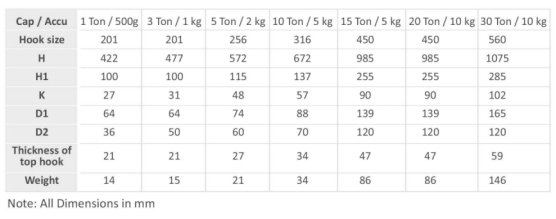
Technical Specifications:
| Power Supply | 230V AC, 50Hz |
| Power Consumption | 6W |
| Display type | LED(RED) |
| Display digit | 5 Digits |
| Display size | 30 mm |
| Number of keys | 3 Keys |
| Battery charger | External |
| Battery | In-built 6V / 7Ah Rechargeable battery |
| Remote control | Key operation |
| Battery operation | 40 Hours (When battery is fully charged) |