

OUR PRODUCTS
Electronic Weighing Scales, Electronic Weighing Scale Systems, GPS Synchronized Clocks, Barcoding Equipment and Systems, Customized Software and Automation Solutions, Counting and Labelling Solutions
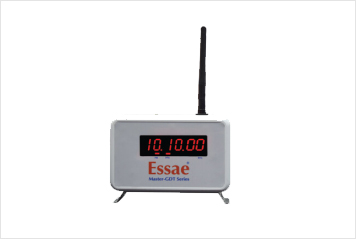
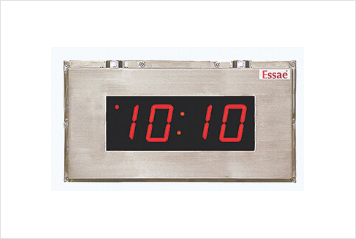
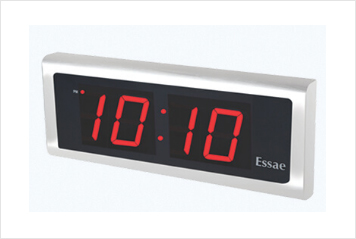
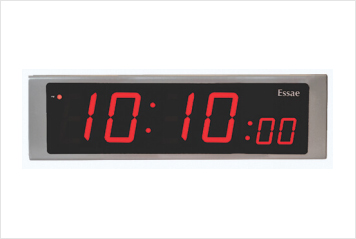
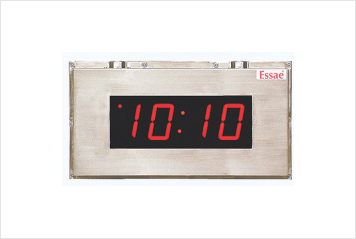
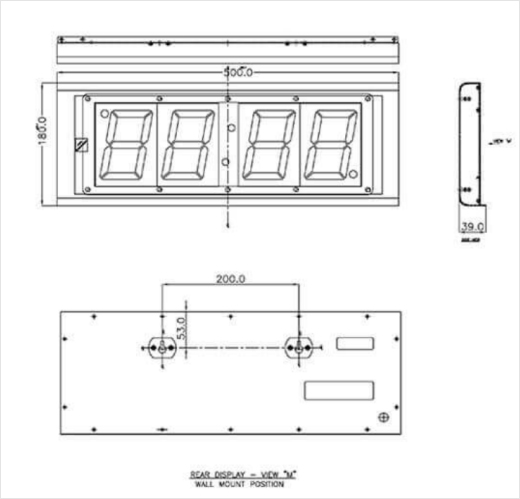
Precision Timekeeping with GPS Clocks: A Smart Investment for Providence Industries
In today' world of lightning speed, accurate timekeeping isn't just a convenience—it's a necessity. At Providence Industries, we understand the importance of precision, coordination, and reliability in every operation. That's why GPS Clocks are becoming an essential part of our technology offering.
What Are GPS Clocks?
GPS (Global Positioning System) clocks are time synchronization devices that receive precise timing signals from GPS satellites. These clocks use the same global network that powers navigation systems, ensuring unmatched accuracy—often to the millisecond. Whether it's for manufacturing floors, educational institutions, hospitals, or transportation hubs, a GPS clock on the ground can produce a time output with an accuracy of 100 nanoseconds or better.
How a GPS clock works
The technical operation of a GPS clock is based on the principle of trilateration, which is also used for geolocation. It functions as follows:
- Satellite segment: Each GPS satellite continuously broadcasts signals containing its precise location in space (ephemeris data), the time the signal was sent (atomic clock data), and a pseudo-random code.
- Signal reception: A GPS clock receiver on Earth picks up these signals from multiple satellites.
- Distance calculation: By measuring the time difference between when the signal was transmitted by the satellite and when it was received, the device calculates its distance from each satellite. This distance is called a pseudo-range because it includes timing errors from the receiver's less-precise internal clock.
- Synchronization and positioning: To resolve the receiver's clock error, a measurement from a fourth satellite is used. With data from four satellites, the receiver can solve for its three-dimensional position (latitude, longitude, and altitude) and synchronize its own clock to the highly accurate GPS time.
- Clock discipline: In a GPS-disciplined oscillator (GPSDO), the GPS timing signal is used to continuously correct and steer a local, high-quality oscillator (like a quartz or rubidium clock), improving its long-term stability and accuracy.
Accuracy and time scales
GPS clocks provide extremely precise time and frequency standards due to the atomic clocks on the satellites.
Nanosecond accuracy: With a clear, unobstructed signal, standard GPS timing receivers can achieve time accuracy within 100 nanoseconds. High-end, multi-channel receivers that track multiple GNSS (Global Navigation Satellite System) constellations can achieve even greater precision.
GPS time vs. UTC: It is important to note that GPS time and Coordinated Universal Time (UTC) are different.
GPS time is a continuous atomic time scale that began on January 6, 1980, and does not observe leap seconds.
UTC is adjusted with leap seconds to stay in sync with the Earth's rotation.
Leap second offset: The GPS system transmits the current offset between GPS time and UTC, allowing receivers to accurately calculate UTC and local time zones. As of mid-2025, the difference is 18 seconds.
Key technical components
A typical GPS clock or GPS-synchronized timing system includes:
GPS receiver module: This component receives the satellite radio signals.
GPS antenna: An external antenna is often used to get an optimal signal, free from obstruction and multipath interference.
Oscillator: A local, high-stability crystal or rubidium oscillator that is disciplined by the GPS signal.
Real-time clock (RTC): An integrated circuit that continues to keep time if the GPS signal is lost.
Microcontroller: Processes the GPS data and manages outputs.
Time output interfaces: Common interfaces for distributing the synchronized time include.
1 Pulse Per Second (1 PPS): A square wave signal that provides a highly accurate timing reference.
Network Time Protocol (NTP): A standard protocol for synchronizing computer clocks over a network.
Precision Time Protocol (PTP): A more advanced and accurate network synchronization protocol.
IRIG-B: A time code format used in a variety of industries.
Technical applications
GPS clocks are critical for applications that require precise and synchronized timing.
- Telecommunications: Synchronizing cellular base stations is a major application, with modern cellular networks depending on microsecond-level timing.
- Power grids: Time synchronization is essential for monitoring and control systems in electrical substations and power plants to analyze grid events.
- Financial transactions: High-frequency stock trading and banking transactions are time-stamped with a legally traceable source of time to establish the sequence of events.
- Data centers: Synchronizing servers and network equipment ensures that log files and distributed processes are time-stamped accurately.
- Scientific research: Disciplined oscillators are used to compare atomic clocks globally, provide a time reference for Very Long Baseline Interferometry (VLBI), and timestamp events in particle physics experiments.
- Military and defense: Precise timing is a core component of GPS for missile guidance and other military applications.
Construction
GPS clocks are available in Plastic, SS, as well as Flame proof housings.